Good Design Gives People Freedom
Engineering time is an investment in the future.
Sometimes, when using a system, there is a moment when you think,
“This is nice.”
It might happen while shopping online.
While using a system you work with every day.
Or while making a reservation or signing up for something.
It is usually not a big, impressive feature.
Instead, it might be something small.
You don't have to enter information you already provided.
You immediately understand what to do next.
If you make a mistake, you know exactly what needs to be corrected.
Information you are likely to need later is right where you expect it to be.
In moments like these, you think,
“They thought of that.”
Someone Thought About It First
Features like these are not there by accident.
Someone thought,
“This might be confusing.”
“They probably won't want to enter this twice.”
“If something goes wrong, they'll want to know what to do next.”
“They may want to check this information again later.”
Someone designing the system thought about these things first, so the user would not have to.
An engineer spends time thinking about something once.
As a result, hundreds, thousands, or perhaps tens of thousands of people may spend a little less time thinking about it themselves.
Time spent by one person can be returned as time to someone else.
That is one of the values engineering can create.
It Isn't Just About Speed
Of course, a well-designed system can save time.
There is less to enter.
There are fewer steps.
A task gets completed more quickly.
But that is only part of the value.
You don't have to hesitate.
You don't have to remember everything.
You don't have to check the same thing again and again.
If something goes wrong, you know what to do next.
You don't have to wonder, “Did I do this correctly?”
Good design can reduce not only the seconds or minutes we can measure, but also the small mental burdens we carry while using a system.
That kind of value feels bigger than simply making something faster.
What We Have Explored in Engineering Time
Throughout this Engineering Time series, we have looked at design from many different angles.
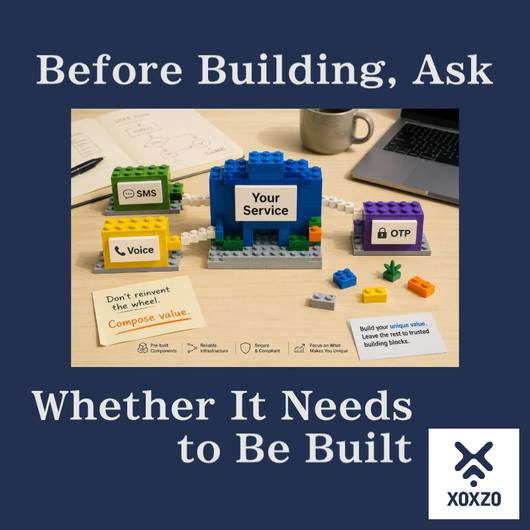
Do we really need to build this?
Can we use something that already exists?
Where should engineering time be spent?
What should we automate, and where should people remain involved?
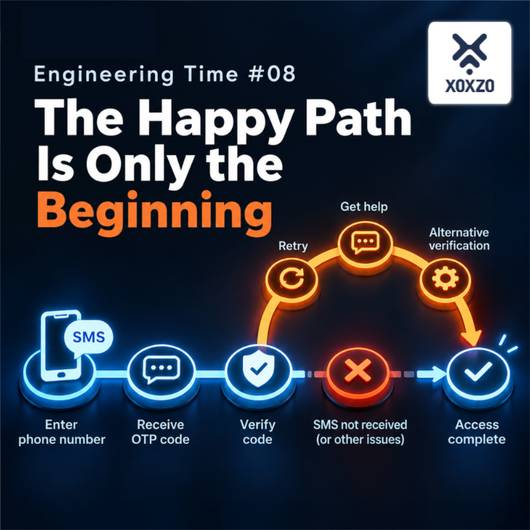
If authentication fails, how do we avoid leaving someone at a dead end?
If one method does not work, can we provide another path?
Have we designed not only the happy path, but also what happens when things go wrong?
And does the choice we make today leave room for different choices in the future?
At first, these may seem like different topics.
But looking back, they all lead to the same place.
People.
Freeing People from the System's Constraints
Every system has constraints.
There is information it needs.
There are processes that must be followed.
Authentication may be required.
External services sometimes fail.
We cannot remove every constraint.
But we do not have to pass every constraint directly on to the user.
Instead of always asking people to adapt to the system,
we can design the system to adapt to people wherever possible.
Let people avoid remembering things they should not have to remember.
Help them move forward without unnecessary confusion.
Give them a way back when something goes wrong.
Give them another option when one method does not fit their situation.
When we do that, people can spend less time thinking about the system itself and return to what they actually wanted to do.
Shop.
Work.
Talk to someone.
Create something.
Spend time with family.
Think about what comes next.
Good design gives people's time back to them.
The Freedom Digital Technology Can Give Us
On Digital Day, we wrote about the way we work at Xoxzo.
Xoxzo has been a fully remote company since its founding.
For me personally, this way of working has removed the daily commute and given me the choice to work while remaining close to my family.
What digital technology gave me was not simply the ability to “work online.”
It gave me more room to choose.
Where to live.
How to work.
How to spend time with family.
Perhaps system design works in much the same way.
Technology itself is not the goal.
What matters is:
What choices and breathing room can this technology leave for people?
Thinking that far ahead is part of design.
Engineering Time Is an Investment in the Future
Today, an engineer might spend an hour thinking,
“Could we make this a little easier to understand?”
Because of that hour, thousands of users may avoid confusion tomorrow.
Designing one more path for when something fails today may prevent someone from getting stuck in the future.
Designing an API so that something can be replaced later may give an engineer years from now the freedom to choose a better solution.
Engineering time is not only time spent writing code.
It can also be time spent today so that someone else does not have to spend that time tomorrow.
So that someone in the future does not have to hesitate.
Does not have to struggle.
Does not have to repeat the same work.
And can spend their time on what they actually want to do.
Sometimes, all of that thinking becomes one very small feature.
The user may never know the name of the person who designed it.
But when they use it, they may think,
“This is nice.”
“They thought of that.”
Behind that small moment is time someone spent thinking about the design.
Engineering time is an investment in the future.
And one of the things that investment can create is
freedom for people.
With this tenth article, we are bringing this chapter of Engineering Time to a close.
What should we build?
What should we choose not to build?
What should we leave to machines?
Where should people remain involved?
And who are we designing for?
Technology will continue to change.
But there will still be people on the other side of it.
Good design gives people freedom.
Thank you for reading Engineering Time.
Aiko Yokoyama
Customer Success and Operations
Joined January 2014. Experienced as a clerk in Foreign Trading company, started and maintained an online supplement store. Lived in overseas for 15 years. Looking forward to communicating our customers with the broad view based on those experience.