Creating a State Where Customers Can Wait with Confidence
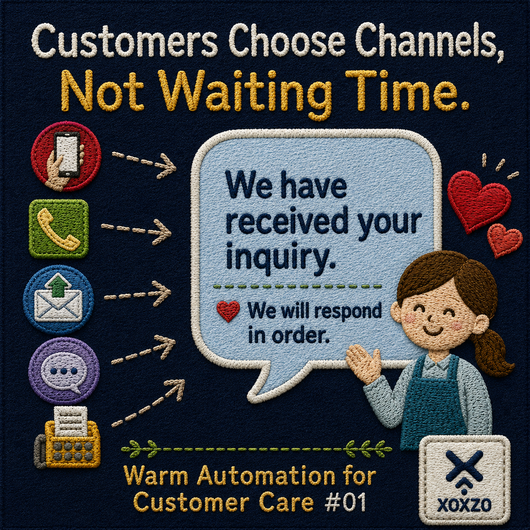
In the previous article, we discussed the idea that customers choose communication channels, not waiting time.
Customers contact businesses through email, phone calls, chat, and many other channels.
Regardless of the channel they choose, however, long waiting times are rarely welcome.
Does that mean businesses must eliminate waiting altogether?
I do not believe so.
People Do Not Necessarily Hate Waiting
Waiting for a doctor's appointment.
Standing in line at a popular restaurant.
Looking forward to the release of a new product.
We accept waiting in many parts of our daily lives.
In other words, people do not necessarily dislike waiting itself.
What they dislike is waiting without knowing what is happening.
What Information Reduces Anxiety?
Have you ever submitted an inquiry and wondered:
"Did they receive it?"
Or found yourself checking your inbox repeatedly, thinking:
"When will they reply?"
Reducing this uncertainty does not require a lengthy explanation.
Simple messages such as:
"We have received your inquiry."
"Our team is reviewing your request."
"We typically respond within one business day."
can significantly improve a customer's sense of reassurance.
Timing Matters as Much as Content
Even the most thoughtful message loses value if it arrives hours later.
Reassurance matters most when it arrives quickly.
Ideally, a business should say:
"We received your message."
before the customer starts wondering:
"Did they get it?"
That is the perfect moment.
And if the waiting period becomes longer than expected, a follow-up message can be just as important.
Good Messages Influence Behavior
Customers who feel reassured are willing to wait.
Customers who feel reassured are less likely to send duplicate inquiries.
Customers who feel reassured are less likely to call repeatedly for updates.
In other words, good communication changes not only how customers feel, but also how they behave.
The real goal of customer communication is not simply to send messages.
It is to create a situation where customers can confidently decide what to do next.
Automation Does Not Remove the Human Touch
Messages like these can be automated.
However, automation does not mean treating people like machines.
Instead, it means understanding what causes uncertainty and building systems that reduce it.
Automation is not about removing human consideration.
It is about turning consideration into a process.
In the next article, we will explore how businesses can build systems that deliver this kind of warm and reassuring customer experience across multiple communication channels.

Aiko Yokoyama
Customer Success and Operations
Joined January 2014. Experienced as a clerk in Foreign Trading company, started and maintained an online supplement store. Lived in overseas for 15 years. Looking forward to communicating our customers with the broad view based on those experience.