Our Identity in the Digital Age
We live surrounded by authentication.
Logging in, making payments, registering accounts, changing settings.
As online services—including smartphone apps—continue to grow,
the moments when we are asked “Are you really you?” increase as well.
Among the many methods used for authentication,
one has been relied upon for a long time: SMS.
Why is SMS chosen for so many authentication processes?
Authentication Does Not Require Conversation
The purpose of authentication is not
to build relationships
or to exchange emotions.
There is only one requirement:
To confirm that someone is who they claim to be—quickly and reliably.
In this context, conversation can actually get in the way.
- Uncertainty about how to reply
- Misinterpretation of wording
- Unnecessary back-and-forth
Effective authentication should not make users think.
It should not make them hesitate.
From this perspective, SMS is highly rational.
SMS Asks Only for Action
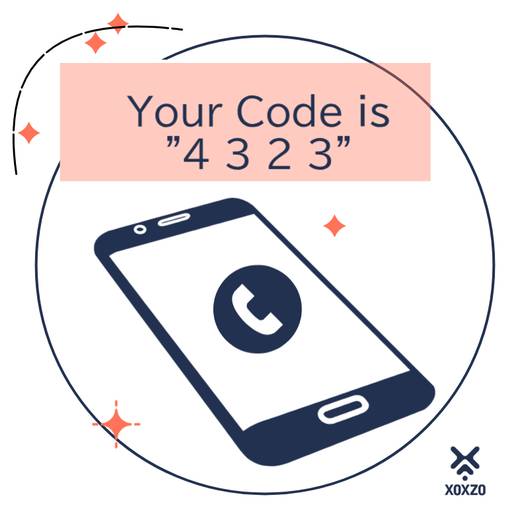
SMS authentication messages are extremely simple.
- A numeric code
- Where to enter it
- How long it is valid
There is no emotion.
No context.
The user performs just one action:
Entering the code.
This is a natural extension of the idea discussed in our previous article,
“Sometimes, the Kindest Message Is the One That Doesn’t Require a Reply”.
SMS does not ask for replies, read receipts, or reactions.
Instead, it quietly prompts a single action.
Fewer Opportunities for Impersonation
Social networks and chat tools are flexible and convenient,
but they also carry a higher risk of account takeover and impersonation.
With SMS authentication, a physical element is introduced:
Whether the person actually possesses the mobile phone number.
Holding the device,
receiving the code in real time,
and entering it within a short window—
this sequence naturally limits opportunities for impersonation.
Authentication Works Best When It Is Quiet
Authentication does not need to stand out.
In fact, the less noticeable it is, the better.
Flashy visuals, “shareable” designs,
or complex steps that require help from others
often lead to user drop-off.
SMS authentication blends into everyday life
and completes its task without interrupting the flow.
That is why it continues to be used
as a default choice across so many services.
Beyond SMS Authentication
Of course, SMS is not a perfect solution for every situation.
- Environments where SMS cannot be delivered
- Users who only have landline phones
- Network-related issues
These cases do exist.
For this reason, voice-based authentication
is increasingly used as a complementary option.
(See: Voice Authentication)
No conversation.
No emotional involvement.
Only the required action.
This design philosophy is shared
by both SMS and voice authentication.
Why SMS Continues to Be Used for Authentication
SMS is not used for authentication because it is new,
nor because it is trendy.
It remains in use because it is:
- Free from conversation
- Clear in the required action
- Low in psychological burden
- Less prone to failure
This quiet rationality is what continues to support SMS
as a standard method for authentication.

Aiko Yokoyama
Customer Success and Operations
Joined January 2014. Experienced as a clerk in Foreign Trading company, started and maintained an online supplement store. Lived in overseas for 15 years. Looking forward to communicating our customers with the broad view based on those experience.